
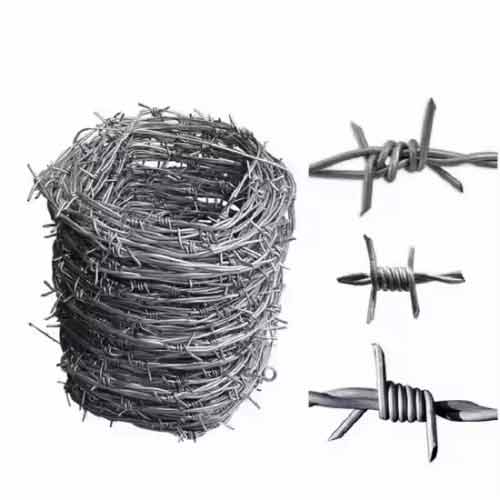
Barbed wire fences have long been used in agriculture and livestock management, but their role in wildlife management is increasingly recognized as a tool for balancing human activities with wildlife conservation. When properly designed and installed, barbed wire fences can help mitigate human-wildlife conflicts, protect endangered species habitats, and guide wildlife movement. However, poorly designed barbed wire fences can pose significant risks to wildlife, causing injury or death through entanglement. Understanding the dual role of barbed wire fences in wildlife management—their benefits and potential harms—is essential for implementing effective, wildlife-friendly fencing strategies.
One of the primary benefits of barbed wire fences in wildlife management is mitigating human-wildlife conflicts. In areas where wildlife (such as deer, elk, or wild boar) frequently raid crops, damage property, or transmit diseases to livestock, barbed wire fences act as a deterrent, reducing these interactions. The sharp barbs create a psychological and physical barrier that discourages wildlife from crossing into agricultural or residential areas. For example, in regions with high deer populations, barbed wire fences can protect crop fields and orchards, reducing economic losses for farmers while minimizing the need for lethal control methods (such as hunting or culling) to manage wildlife populations.
Barbed wire fences also play a role in protecting endangered or threatened species by safeguarding their habitats. By enclosing critical habitats (such as breeding grounds, feeding areas, or migration corridors), barbed wire fences prevent human intrusion (e.g., off-road vehicles, poaching, or livestock grazing) that can disrupt wildlife ecosystems. In some cases, fences are used to create exclusion zones around sensitive habitats, allowing endangered species to thrive without human disturbance. Additionally, barbed wire fences can be used to separate different wildlife populations, preventing the spread of diseases or genetic mixing that could threaten vulnerable species.
However, barbed wire fences pose significant risks to wildlife if not properly designed. Birds of prey (such as eagles or hawks) can become entangled in the wire while flying, leading to injury or death. Large mammals may get their antlers, hooves, or limbs caught in the barbs when attempting to cross the fence, resulting in severe wounds, infections, or starvation. Young or small wildlife are particularly vulnerable, as they may not recognize the fence as a barrier and are more likely to become entangled. These risks are heightened in areas with high wildlife density or where fences cross migration routes, disrupting natural movement patterns.
To maximize the benefits of barbed wire fences in wildlife management while minimizing harms, several wildlife-friendly modifications can be implemented. Installing fence markers (such as reflective tape or flags) increases visibility for birds and mammals, reducing the risk of collision or entanglement. Raising the bottom wire of the fence or using a smooth wire for the bottom strand prevents small animals from becoming trapped. Using electrified barbed wire (at low voltage) can enhance deterrence while reducing the need for multiple barbs, minimizing entanglement risks. Additionally, strategic placement of fences—avoiding migration corridors and sensitive habitats—ensures that natural wildlife movement is not disrupted. By adopting these practices, barbed wire fences can be a valuable tool in wildlife management, promoting coexistence between humans and wildlife.
-
2026-03-13For ranchers and rural landowners, the 3 strand barbed wire fence represents a time-tested compromise between cost, functionality, and animal control. Simpler than multi-wire electric systems yet more effective than single-strand boundaries, this configuration delivers reliable containment
-
2026-03-12Razor wire represents the most effective physical deterrent available for high-security perimeter protection, creating barriers that combine psychological deterrence with physical obstruction that significantly increases the difficulty and risk of unauthorized access. Unlike standard barbe
-
2026-03-11The strength of any wire-based fencing system is concentrated at its turning points. A barbed wire fence corner post bears the brunt of the tension from the wire strands, acting as the anchor for the entire line. If the corner post fails, the fence will sag, lose its effectiveness, and eve