
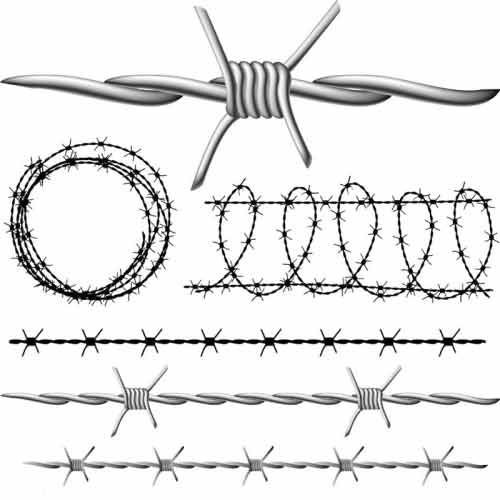
Agricultural barbed wire fencing remains a cornerstone of rural land management, offering an economical, durable, and highly effective means of securing vast acreage for livestock containment, crop protection, and boundary demarcation. Its simplicity and scalability make it ideal for farms, ranches, and timberlands where budgets are tight and terrain is often rugged or expansive. Unlike more expensive alternatives such as welded wire or electric fencing, barbed wire delivers robust performance with minimal material costs and straightforward installation techniques that require no specialized equipment or extensive training.
The cost-effectiveness of barbed wire stems from its efficient use of materials and labor. A single strand of high-tensile steel wire with evenly spaced barbs can span hundreds of feet between sturdy wooden or metal posts, minimizing the number of supports needed and reducing overall material expenditure. Installation typically involves stretching the wire taut using hand-operated tensioners and securing it with staples or clips, allowing crews to cover large distances quickly and efficiently. Maintenance is relatively low: periodic inspections for sagging, broken strands, or post rot are sufficient to keep the fence functional, with repairs often involving simply replacing a short section rather than rebuilding entire segments.
Despite its low upfront cost, barbed wire fencing must be properly engineered to meet specific agricultural needs. For example, cattle require fewer strands (typically 3–5) spaced wider apart to prevent entanglement, while sheep or goats benefit from tighter spacing and additional lower strands to deter squeezing through gaps. In predator-prone areas, combining barbed wire with smooth wire or electric strands enhances deterrence without significantly increasing expense. Strategic placement of corner braces, gate hardware, and tension assemblies further improves longevity and reduces the risk of failure under animal pressure or storm conditions.
Environmental and regulatory considerations also influence barbed wire selection and deployment. In some regions, laws restrict barb density or mandate warning signage near public roads to mitigate injury risks. Eco-friendly options such as galvanized or vinyl-coated wires reduce corrosion and extend service life, while minimizing chemical runoff into soil or waterways. When paired with sustainable land management practices—including rotational grazing and buffer zone planting—barbed wire fencing becomes not just a financial asset but a strategic tool for responsible stewardship of large-scale agricultural landscapes.
-
2026-03-13For ranchers and rural landowners, the 3 strand barbed wire fence represents a time-tested compromise between cost, functionality, and animal control. Simpler than multi-wire electric systems yet more effective than single-strand boundaries, this configuration delivers reliable containment
-
2026-03-12Razor wire represents the most effective physical deterrent available for high-security perimeter protection, creating barriers that combine psychological deterrence with physical obstruction that significantly increases the difficulty and risk of unauthorized access. Unlike standard barbe
-
2026-03-11The strength of any wire-based fencing system is concentrated at its turning points. A barbed wire fence corner post bears the brunt of the tension from the wire strands, acting as the anchor for the entire line. If the corner post fails, the fence will sag, lose its effectiveness, and eve