
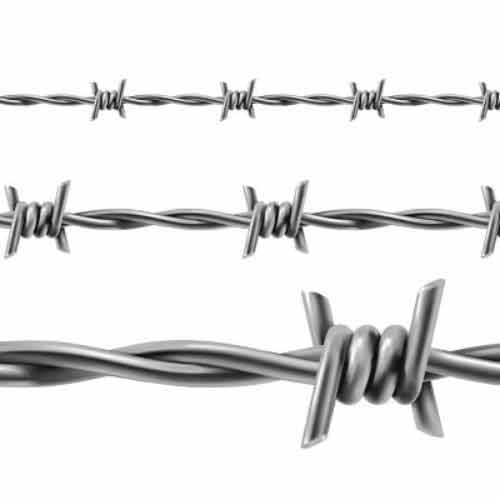
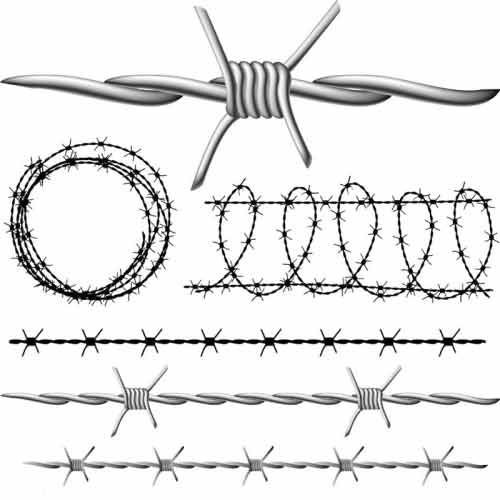
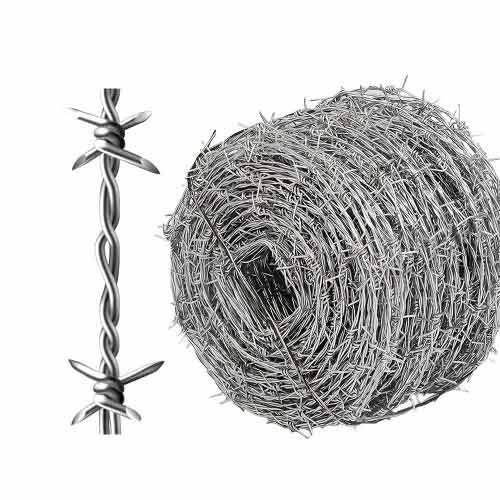
Barbed wire fences have evolved into several distinct types, each designed for specific security and containment needs. Traditional twisted barbed wire consists of two galvanized steel strands twisted together with barbs spaced at regular intervals. This basic design is economical and widely used for agricultural boundaries and low-security perimeters. The sharp barbs deter animals and unauthorized humans through discomfort and injury risk, but the simplicity of the twist can allow experienced intruders to navigate past with care.
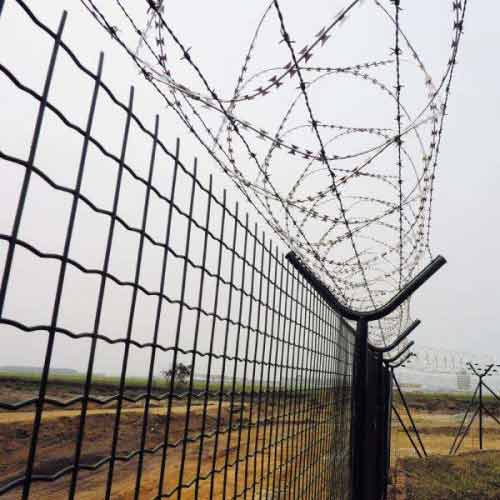
High-security barbed wire includes variants like razor ribbon and concertina wire. Razor ribbon features a flat strip with sharply serrated steel blades alternating with barbs, creating a formidable barrier that inflicts severe cuts. Often coiled in tight spirals, it is used on walls, gates, and atop fences in prisons and military zones. Concertina wire is a collapsible, coiled variant resembling a spring; its multiple loops and dense barb placement make it difficult to grasp or cut, serving as a rapid-deployment obstacle in tactical or emergency situations.
Welded barbed wire mesh merges barbed strands with a rigid grid, offering both physical and psychological deterrence. The mesh format prevents climbing and spreading, distributing pressure evenly across the fence. It is common in industrial sites and high-risk borders. Another type is electrified barbed wire, which adds a low-voltage current to standard or razor wire. Contact triggers an electric shock, greatly increasing deterrence. Such systems require strict safety protocols and insulated posts to prevent unintended harm.
Selection depends on threat level, environment, and cost. Agricultural settings may favor traditional twisted wire for cost-effectiveness, while secure facilities opt for razor or electrified variants. Climate considerations include corrosion resistance—galvanized or stainless-steel options ensure longevity. Understanding the characteristics of each barbed wire type helps design fences that deliver the right balance of deterrence, durability, and practicality.
-
2026-03-13For ranchers and rural landowners, the 3 strand barbed wire fence represents a time-tested compromise between cost, functionality, and animal control. Simpler than multi-wire electric systems yet more effective than single-strand boundaries, this configuration delivers reliable containment
-
2026-03-12Razor wire represents the most effective physical deterrent available for high-security perimeter protection, creating barriers that combine psychological deterrence with physical obstruction that significantly increases the difficulty and risk of unauthorized access. Unlike standard barbe
-
2026-03-11The strength of any wire-based fencing system is concentrated at its turning points. A barbed wire fence corner post bears the brunt of the tension from the wire strands, acting as the anchor for the entire line. If the corner post fails, the fence will sag, lose its effectiveness, and eve