

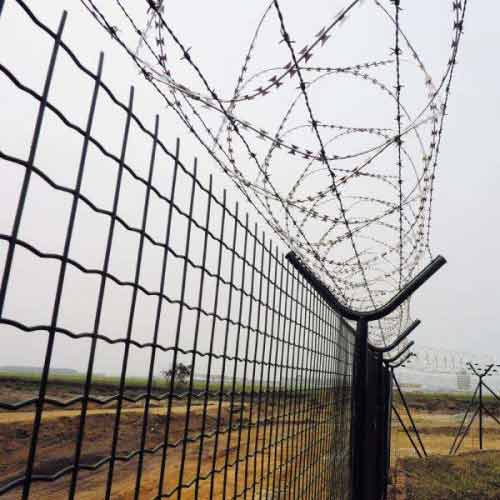
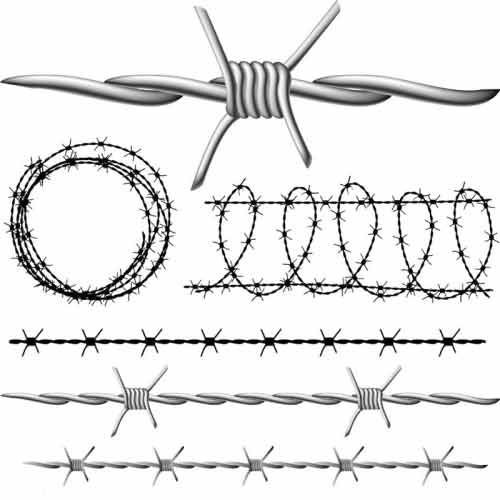
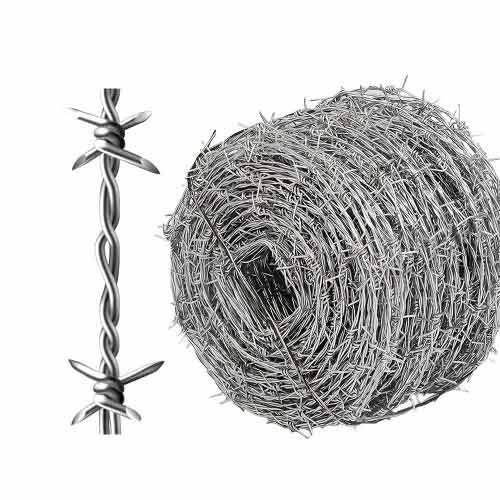
The evolution of perimeter security has moved far beyond the traditional twisted barbed wire of the past, ushering in an era of high-tensile razor wire systems. While traditional barbed wire relies on sharp points twisted around a central core to deter casual intrusion, modern razor wire utilizes a stamped metal blade design that creates a far more lethal and psychological barrier. The fundamental difference lies in the mechanism of injury: traditional wire snags clothing and causes superficial cuts, whereas razor wire is designed to penetrate and inflict deep lacerations, making it a formidable deterrent against determined attackers. This shift reflects a growing need for higher security standards in prisons, military bases, and critical infrastructure.
Manufacturing techniques for razor wire involve precision stamping of high-carbon steel or stainless steel strips into concave or diamond-shaped profiles. These blades are then clipped around a high-strength steel core wire, creating a continuous series of cutting edges. Unlike the intermittent barbs of traditional wire, razor wire offers 360-degree coverage of sharp edges. The tension in these systems is significantly higher, often exceeding 2,000 Newtons, which prevents the wire from being easily cut or deformed by bolt cutters. The coils are typically much larger in diameter—often 450mm to 900mm—making them impossible to climb over without specialized equipment, unlike the smaller loops of traditional fencing.
Corrosion resistance has been a major focus in the innovation of these materials. Modern razor wire is often galvanized or coated with zinc-aluminum alloys to withstand decades of outdoor exposure. For extreme environments, such as coastal borders or chemical plants, stainless steel grades like 304 or 316 are used to prevent rust from dulling the blades or compromising the structural integrity of the core. Traditional twist-tie wire, often made of mild steel, corrodes relatively quickly, losing its tension and aesthetic appeal within a few years. The longevity of modern systems reduces the lifecycle cost of security fencing despite the higher initial investment.
Installation methods have also evolved to accommodate the aggressive nature of razor wire. Because the material is extremely sharp, specialized tools like tensioning wrenches and protective gloves are mandatory. The wire is often deployed in a "concertina" style, where coils are clipped together to form a continuous line, or as individual "coils" (like the CBT-60 design) that are spaced apart. For top-tier security, double-coil or triple-coil arrangements are used, creating a redundant barrier that requires significant time and equipment to breach. In contrast, traditional barbed wire is usually strung loosely on fence posts, making it easier to flatten or cut.
The psychological impact of razor wire cannot be overstated. The visual appearance of glistening, razor-sharp blades creates a strong psychological barrier that deters intrusion attempts before they begin. This is particularly effective in high-crime areas where the perception of risk must be maximized. Traditional wire, while functional, is often viewed as a "farm fence" material that can be easily bypassed by determined thieves. Modern innovations also include integration with alarm systems; some razor wire designs feature integrated sensors that detect cutting or climbing, triggering immediate alerts to security personnel.
Despite its aggressive nature, modern razor wire is designed with safety features for authorized personnel. Anti-climb brackets and clear signage are used to warn of the danger, and specific access points are fitted with non-cutting gaps or removable sections. The innovation lies in balancing extreme deterrence with controlled access. While traditional twist-tie wire remains relevant for low-security agricultural containment, the dominance of razor wire in high-security applications highlights a clear trend toward proactive, physical denial systems that prioritize asset protection and perimeter integrity above all else.
-
2026-03-13For ranchers and rural landowners, the 3 strand barbed wire fence represents a time-tested compromise between cost, functionality, and animal control. Simpler than multi-wire electric systems yet more effective than single-strand boundaries, this configuration delivers reliable containment
-
2026-03-12Razor wire represents the most effective physical deterrent available for high-security perimeter protection, creating barriers that combine psychological deterrence with physical obstruction that significantly increases the difficulty and risk of unauthorized access. Unlike standard barbe
-
2026-03-11The strength of any wire-based fencing system is concentrated at its turning points. A barbed wire fence corner post bears the brunt of the tension from the wire strands, acting as the anchor for the entire line. If the corner post fails, the fence will sag, lose its effectiveness, and eve