
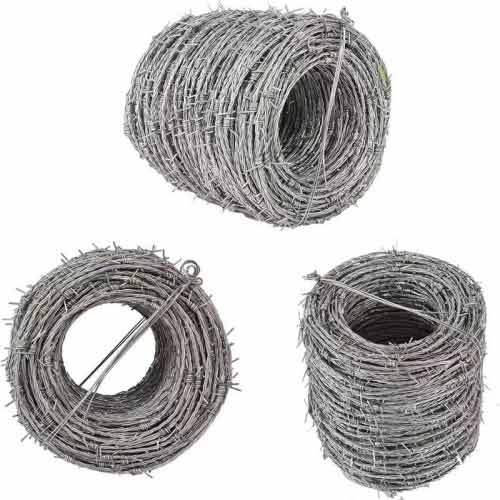
Barbed wire fencing remains a prevalent choice in agricultural, industrial, and high-security applications due to a set of distinct, practical advantages over many other fencing types. Its primary benefits stem from its cost-effectiveness, psychological and physical deterrence, and suitability for enclosing large areas with minimal material. While not appropriate for all settings, such as residential gardens or areas with children and pets, its functionality in specific contexts is unmatched.
The most significant advantage is low cost and material efficiency. Barbed wire uses far less material than solid wood, vinyl, or mesh panel fences. It consists primarily of strands of wire and intermittent barbs, requiring only sturdy posts (steel T-posts or wooden posts) for support. This makes it the most economical option for fencing extensive perimeters like farm boundaries, ranch land, or large industrial yards. The installation, while labor-intensive, is straightforward and can be completed quickly over long distances compared to building panel-based fences.
Barbed wire excels in deterrence and psychological impact. The visible, sharp barbs send an unambiguous message of "keep out" or "do not touch." This psychological barrier is often as effective as the physical one, discouraging casual intrusion, vandalism, and trespassing by humans. For livestock, particularly large animals like cattle and horses, the painful threat of the barbs effectively teaches them to respect the fence boundary without causing serious injury when used correctly, preventing them from leaning on or pushing through the barrier.
For livestock management on open range or large pastures, barbed wire is highly functional. It creates a visible boundary that is effective at containing cattle, which learn to avoid the barbs. Its open design allows for wind passage and does not create snow drifts like solid fences, an important consideration in windy or snowy climates. When installed in multiple strands (typically 4 to 5 strands for cattle), it forms an effective barrier that is both affordable and practical for managing large herds over vast areas that would be prohibitively expensive to fence with other materials.
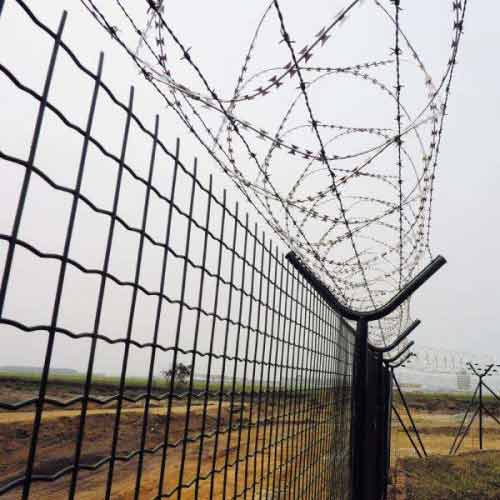
Finally, barbed wire offers durability and low maintenance when constructed with galvanized or stainless steel wire. It withstands weather extremes and, unless subjected to severe impact, requires little upkeep beyond occasional tightening and post inspection. It is not susceptible to rot, insect damage, or fire like wooden fences. In security applications, it can be enhanced with razor wire toppings or electrified strands for perimeter protection of prisons, military sites, or high-value equipment storage. Its simplicity and raw effectiveness for demarcation and deterrence in non-sensitive areas cement its continued relevance.
-
2026-03-13For ranchers and rural landowners, the 3 strand barbed wire fence represents a time-tested compromise between cost, functionality, and animal control. Simpler than multi-wire electric systems yet more effective than single-strand boundaries, this configuration delivers reliable containment
-
2026-03-12Razor wire represents the most effective physical deterrent available for high-security perimeter protection, creating barriers that combine psychological deterrence with physical obstruction that significantly increases the difficulty and risk of unauthorized access. Unlike standard barbe
-
2026-03-11The strength of any wire-based fencing system is concentrated at its turning points. A barbed wire fence corner post bears the brunt of the tension from the wire strands, acting as the anchor for the entire line. If the corner post fails, the fence will sag, lose its effectiveness, and eve